

愛普生推出新M-G366PDG、M-G330PDG擴展G系列IMU產品線
愛普生推出新M-G366PDG、M-G330PDG擴展G系列IMU產品線
- 新款感應系統內建加速度感應器,動態輸出範圍可應設計者需求由±8G或±16G設定調整 –
- 東京,日本 -
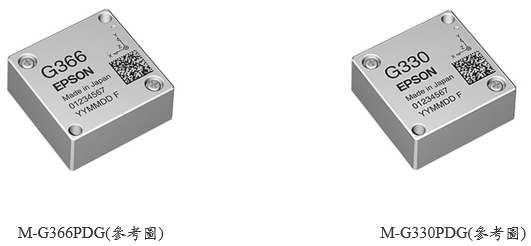
Epson於2011年首次推出高階慣性量測IMU*1感應器產品線,該產品已應用於許多高階量測設備系統中,從精準農業 (GNSS*2) 和無人機到相機和天線平台振動控制和穩定,其卓越的性能和品質贏得業界中極好的聲譽。愛普生IMU系列包括高階規格M-G370PDS(“M-G370S”)和M-G370PDF(“M-G370”),它們皆能提供高穩定性和高精度測量能力兼具低噪聲特性,產品外型設計約為一英寸乘上約一英寸的面積。為了強化豐富現行IMU產品線,愛普生開發推出新款M-G366作為標款準產品型號、M-G330則視為基本款產品型號,兩款皆相容現行產品線同系列機種的外型設計。
M-G366和M-G330可讓系統設計人員選擇內建加速度感應器於±8G或±16 G動態感應範圍輸出。此外,兩機種在內建陀螺儀傳感器的所有動態感應角速度輸出範圍內,提供0.05%的非線性度*3,從而可以更準確地量測各種姿態或動作,無論是低速或是高速。透過其小巧、輕便、低功耗,一系列型感應器外型為一英寸長、寬產品線,愛普生讓客戶隨時能視產品設計和應用需要,選擇其最佳性價比的慣性量測感應器產品。
M-G366和M-G330 已於Japan Management Association的Maintenance & Resilience Osaka 2022展出,該活動已於2022年12月7日至9日在大阪國際展覽中心舉行。此外,我們亦將於該年11月 30日至12月2日在RX Japan Ltd.虛擬活動主辦的“第二屆 Nepcon Japan Online”上展示新產品。
鑒於現今社會和產業技術的快速變革,愛普生認為,高精密傳感器用於視覺相關資料信息應用的需求將會不斷擴大。愛普生將繼續透過我們省、小和精的產品核心開發創新理念,提供小巧、輕便、低功耗的傳感系統,這些系統具有卓越的高精度和高穩定性,為我們客戶其產品研發也提供了許多貢獻。
M-G366PDG、M-G330PDG產品特點
· 一英寸外型設計標準化平台(24x24x10mm3),可相容於現行M-G370和MG370S,結省設計開發和評價性能所需投入的成本和資源
· 內建加速度感應器可依應用選擇支援±8G或±16G
· 內建陀螺儀感應器提供0.05%的非線性精準度
· 低耗電,16mA
產品應用
· 無人飛行器(產業用途、陸上交通用途、海洋探測,等)
· 相機或是天線等防振動用途,等
· 工業設備振動、角度、軌跡量測,等
· 導航系統(GNSS、INS4*4、高精度定位器),等
相關產品連結
更多有關動態感應系統相關產品連結,global.epson.com/products_and_drivers/sensing_system/
產品規格
|
效能和功能 產品機種 |
新產品 |
新產品 |
現行品 |
現行品 |
|
|
基本款 |
標準款 |
高效能款 |
高效能款低噪音款 |
||
|
產品機種 |
M-G330 |
M-G366 |
M-G370 |
M-G370S |
|
|
動態輸出 |
Gyroscopic *5 |
±400º/Sec. |
±450º/Sec. |
±450º/Sec. |
±200º/Sec. |
|
Accelerometer |
±16G/±8G |
±16G/±8G |
±10G |
±10G |
|
|
精準和穩定性 |
Gyro Bias Instability*6 |
3°/h |
1.2°/h |
0.8°/h |
0.8°/h |
|
Angle Random Walk*7 |
0.1°/√h |
0.08°/√h |
0.06°/√h |
0.03°/√h |
|
|
Gyro non-linearity |
0.05% , of Full Scale |
0.05%, of Full Scale |
0.05%, of ±300°/s. |
0.05%, of ±130°/s. |
|
|
初始 偏差 |
Gyroscopic Sensors |
±720°/h,σ (-10℃~+60℃) |
±360°/h,σ(-40℃ ~ +85℃) |
±360°/h,σ (-40℃ ~ +85℃) |
±360°/h,σ (-40℃ ~ +85℃) |
|
Accelerometers |
±4mG,σ |
±3mG,σ |
±2mG,σ |
±2mG,σ |
|
|
控制介面 |
SPI & UART |
||||
|
資料輸出解析度 |
32-bit / 16-bit |
||||
|
最大資料輸出率 |
2,000 Hz |
||||
|
工作溫度 |
-40℃ to +85℃ |
||||
|
耗電 |
16mA (3.3V) |
||||
|
外形尺寸 |
24 x 24 x 10 mm³ |
||||
詞彙原文補充說明
*1 Inertial measurement unit
(IMU)
An IMU is a device that is used for sensing inertial motion. It is comprised of
triaxial angular rate sensors and triaxial accelerometers.
*2 A global navigation
satellite system (GNSS)
A satellite system that is used to pinpoint a geographic location anywhere in
the world
*3 Non-linearity
The maximum deviation from an approximate straight line of the output versus
input of a gyroscopic sensor or accelerometer. It is typically expressed as a
percentage of the full scale.
*4 Inertial navigation system (INS)
*5 Gyroscopic sensor
(angular rate sensor)
Measures the rotation angle (angular rate) of an object versus a reference axis
per unit of time.
*6 Bias instability
The part of the Allan variance* that represents the horizontal (zero power)
characteristic is called bias instability. It correlates with 1/f noise and is
one of the important indicators of sensor potential.
*7 Angle random walk
The part of the Allan variance with a slope of -1/2 is called the angle random
walk. Since there is a correlation with white noise, increasing the average
time decreases the value at -1/2 of the average time.
* Allan variance
An indicator of sensor performance, the Allan variance indicates the stability
of the static output. The horizontal axis shows the averaging time of data, and
the vertical axis shows the distribution of the average value when separated by
the average time. It is known that the slopes of the characteristics appearing
in the Allan variance are -1, -1/2, 0, 1/2, and 1st power slopes, the Allan
variance correlates with the noise density, and the noise density is the
frequency. Allan variance is an indicator expressed in time. The smaller the
value, the higher the stability and the better the performance.
2023-03-02